
Mapping Cumberland County People Directories
Cumberland County people directories do not sit in one database. Each list has a narrow purpose. City and county pages identify public contacts. School and university directories identify staff. Deed and tax indexes list parties or owners, while historical directories connect names with earlier Fayetteville addresses. Choosing the list that matches the person’s role and time period avoids false matches.
| Name Directory | People Included | Official Keeper | Ways to Access It |
|---|---|---|---|
| Fayetteville staff tables | Officials and public-facing staff | City of Fayetteville | Department pages, main line, or clerk |
| CCS staff directory | School administrators and staff | Cumberland County Schools | Free name filter and school pages |
| FSU faculty tables | Faculty and department staff | Fayetteville State University | Free college and department pages |
| Land and tax indexes | Recorded parties and listed owners | Register of Deeds and Tax Administration | Web search, office, or archive |
| Current voter lookup | Registered voters under a searched spelling | NC State Board of Elections | Free individual lookup; protected fields withheld |
| Business and license searches | Agents, company officials, licensees | NC Secretary of State and boards | Free official indexes |
| Fayetteville historical directories | Past residents and businesses | Public library and archives | Digital copies, catalog, or onsite use |
A current role points toward an agency or school directory. An address points toward the owner roll or a reverse directory, which lists an occupant by street rather than by surname. Older family work may require a city volume, yearbook, obituary, cemetery register, or archive catalog. These sources show different facts, so one listing should not be treated as proof of a current home address.
Fayetteville Government Directory Contacts
Fayetteville does not publish one verified citywide employee-name search. Department pages are the practical directory. The City Manager’s Office staff table, for example, displays staff name, title, official phone, and email. A listed entry identifies a public role and contact route, not a private address.
The official City Manager table appears in this directory image.
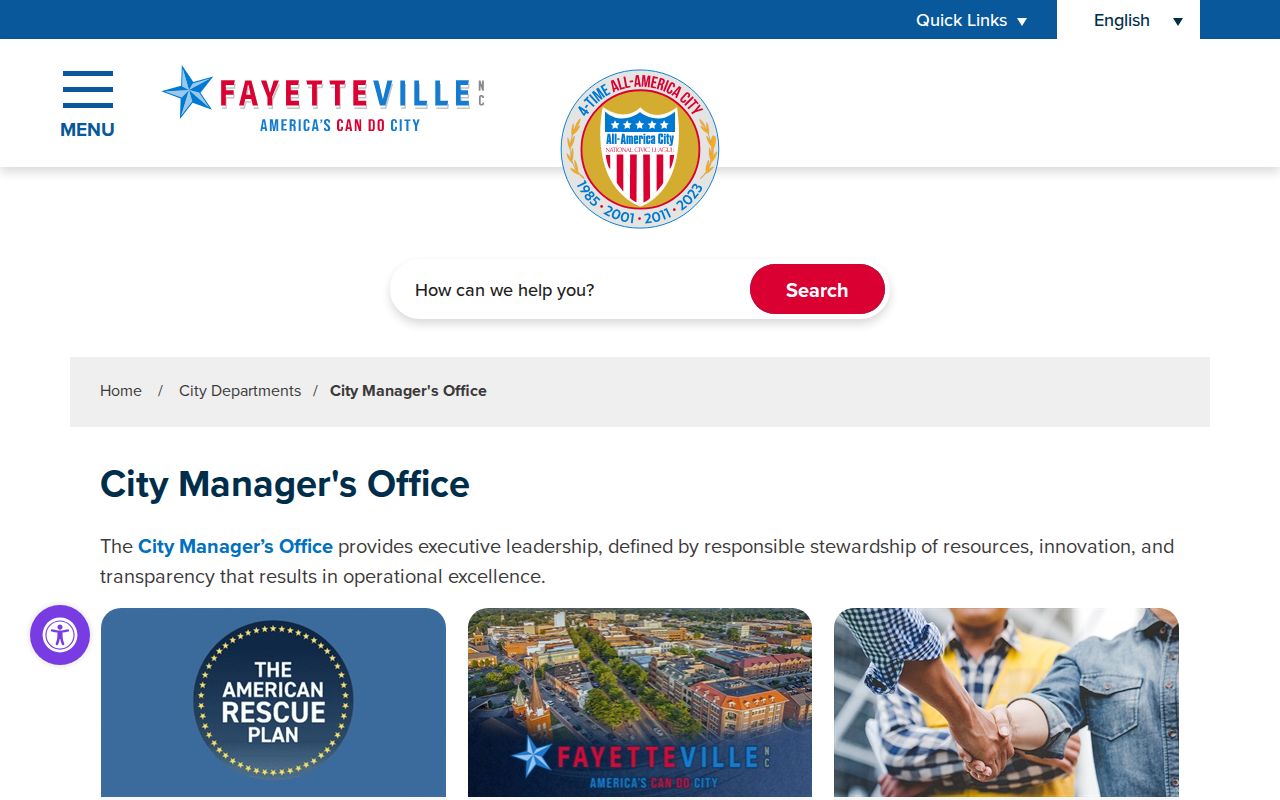
Its row-based format makes a department and title easier to confirm than a broad web search. If the person is absent, call the relevant department or city switchboard, then ask the City Clerk about older council, board, or appointment records. Cumberland County department pages, its frequently requested phone list, and the Clerk to the Board serve the same role for county officials and public contacts.
Note: A missing staff name may mean the person works under a different department page, not that no public contact exists.
Cumberland School Staff Directory
The Cumberland County Schools staff directory is the strongest current education name search found in the county. Its main results use public staff cards. Search by surname first, then try a full name. Separate school and department pages may provide more detail than the district-wide result.
The Cumberland County Schools directory form is shown here before a name filter is applied.
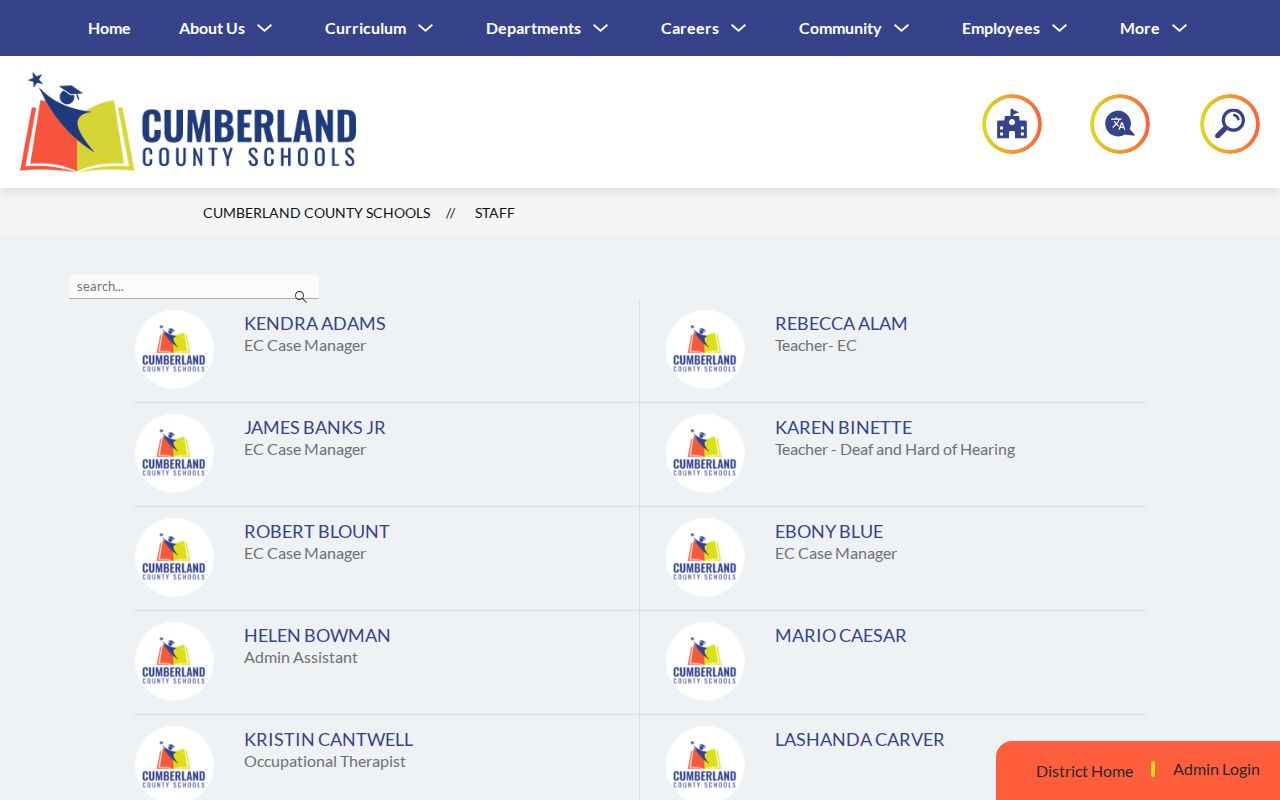
The interface supports a short, focused search rather than a resident lookup.
| Directory Control | Input Type | Needed? | How It Works |
|---|---|---|---|
| Search field | Text | No | Filters the public cards by staff name |
| Search | Button | No | Runs the staff-name filter |
| Pagination | Page links | No | Moves through pages or jumps to a page number |
A main result card may show a portrait, full name, and position title. Some cards omit a title. Richer team pages can add phone and email. Search the staff member’s school or unit when the broad directory produces only a name.
Fayetteville State Directory Entries
Fayetteville State University publishes faculty and staff tables within its colleges and departments, though no central searchable directory was verified. The School of Nursing table shows how these institutional directories work. Search the university site by a surname plus a department when a central name box is unavailable.
The FSU Nursing directory displays one department’s current roster.

A typical public entry can include the fields summarized here:
| Full name | Faculty or staff member’s published name |
|---|---|
| Title | Academic rank or administrative role |
| Room | Campus building and room when supplied |
| Phone | Official campus contact number |
| Institutional email address |
FSU archives and digital collections broaden the directory trail to alumni, faculty, campus groups, commencement lists, student newspapers, and yearbooks. Methodist University and Fayetteville Technical Community College libraries may also hold catalogs and yearbooks. Current staff pages do not function as complete alumni directories.
North Carolina Employee Directory
The North Carolina Employee Directory helps locate a state agency contact who may serve Cumberland County. Its optional fields accept first or middle name, last name, and agency. Search and Reset controls complete the form. The source is built mainly from the state’s BEACON payroll and timekeeping data, and only valid state-government email domains are published.
The state employee directory form offers a useful agency filter for common surnames.
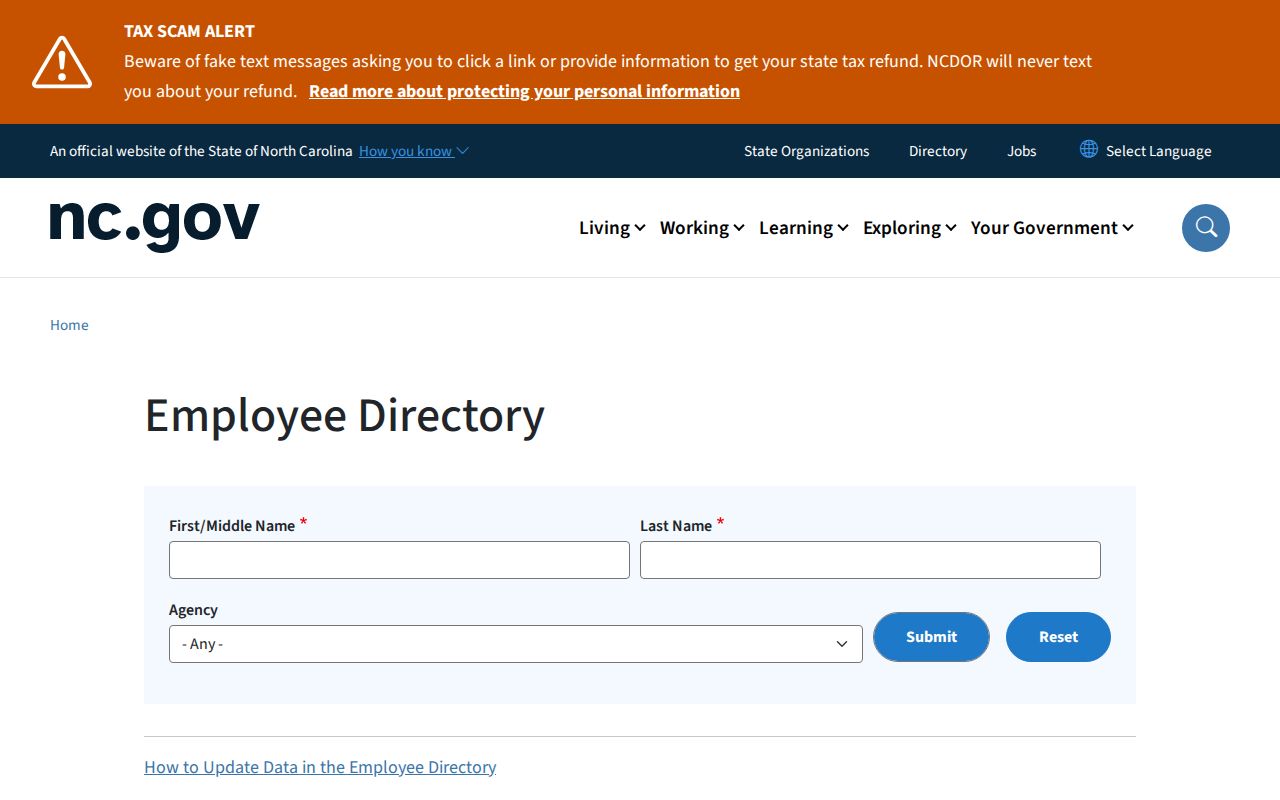
Results should be read as official work contacts. If a name does not appear, move to the agency’s own staff page or main telephone number. Elected-official rosters, board membership lists, and meeting minutes can also identify a public role when a staff directory has no match.
Cumberland Land and Owner Directories
Two Cumberland County record systems act like name directories but answer different questions. The Register of Deeds index lists grantors and grantees, the parties who give and receive an interest in a recorded instrument. County land holdings date to 1754, while the State Archives deed index begins in 1752. The current web cutoff was not stated, so older results may require index books, office help, or archival copies.
Tax Administration lists the owner used for the annual property roll. Its search accepts owner name, street name, parcel number, or bill number, with prior-year bills on a separate route. A parcel is a mapped unit of land. The card may show the listed owner, mailing and situs addresses, parcel number, values, improvements, and a deed book/page reference. Situs means the physical property location. A mailing address is merely the tax contact address.
The Real Estate and GIS access page links the free property card, bill search, and Data Viewer. For a failed portal search, call Tax Administration, visit the office, or use the Register of Deeds citation. Detailed access-law and copy procedures belong with Cumberland County public records.
Cumberland Business and License Directories
Business and license people directories serve narrow official roles. The North Carolina Secretary of State business search can find an entity, registered agent, company official, and filing history. Search modes include organizational name and registered-agent name. Results can supply an SOSID, status, formation date, registered office, principal or mailing address, officials reported in filings, and document images. Initials, punctuation, and address variants may split one person’s records into several result groups.
Professional directories are kept by the board that issued each credential. North Carolina has distinct searches for medical, nursing, law, general contracting, real estate, cosmetic art, teaching, and ABC permits. A board entry may show a name, license number and type, status, public office contact, specialty, or discipline link. The state professional-license gateway helps identify the right board, but it is not the final person-level verification tool.
The official NC Cash directory provides another name path for Cumberland County residents, businesses, and co-owners connected to unclaimed property, as shown here.
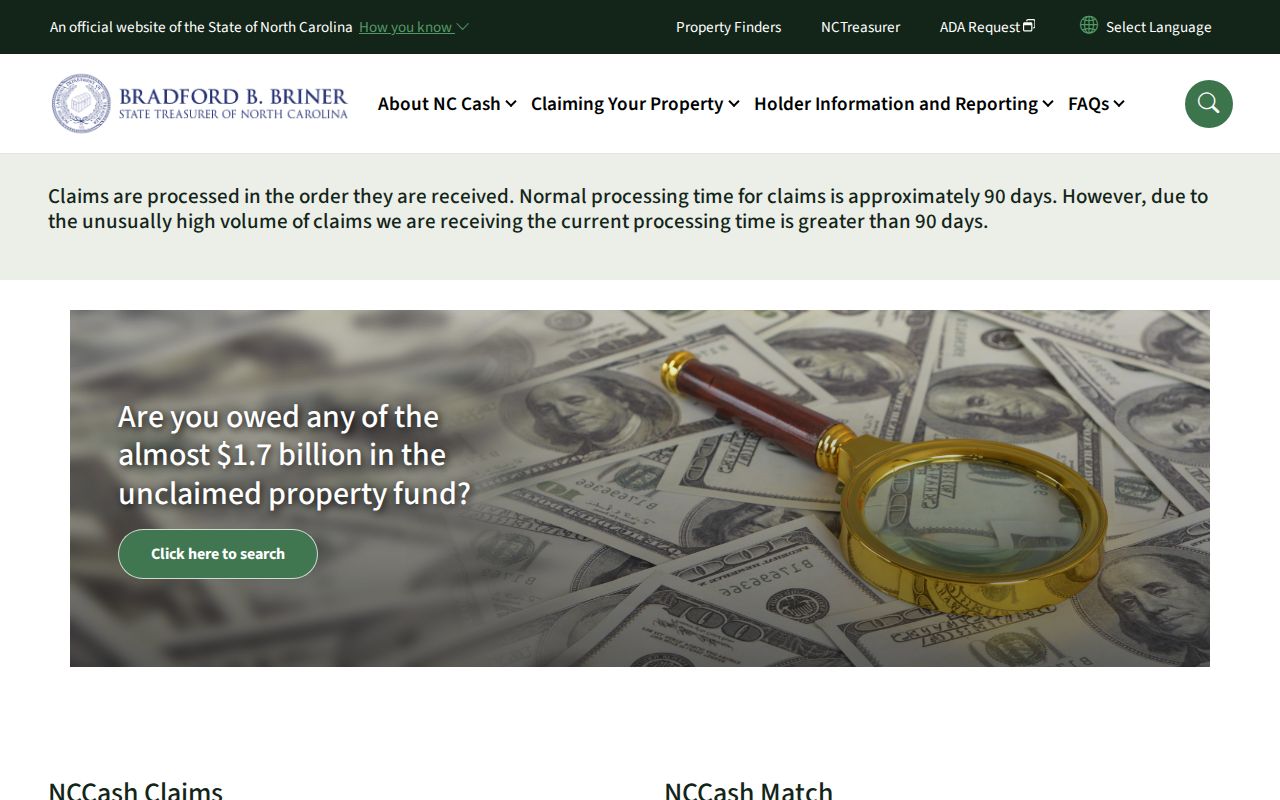
A possible match begins the State Treasurer’s private proof process. It does not confirm identity by itself. Chamber member directories can identify firms and public contact people who chose to be listed, but they cover members rather than all local businesses.
Note: A license or business address may be an office or mailing address and should not be treated as a person’s home.
Cumberland Library Directory Collection
Historical people directories converge at Local & State History in Cumberland County Public Library. The collection sits on the second floor of Headquarters Library, 300 Maiden Lane in Fayetteville. Its holdings include city directories, yearbooks, maps, newspapers, census material, vital-record indexes, photos, local histories, and licensed genealogy resources. Call 910-483-7727 extension 1365 for a specific title or format.
The library’s local-history service and collection categories appear in this image.
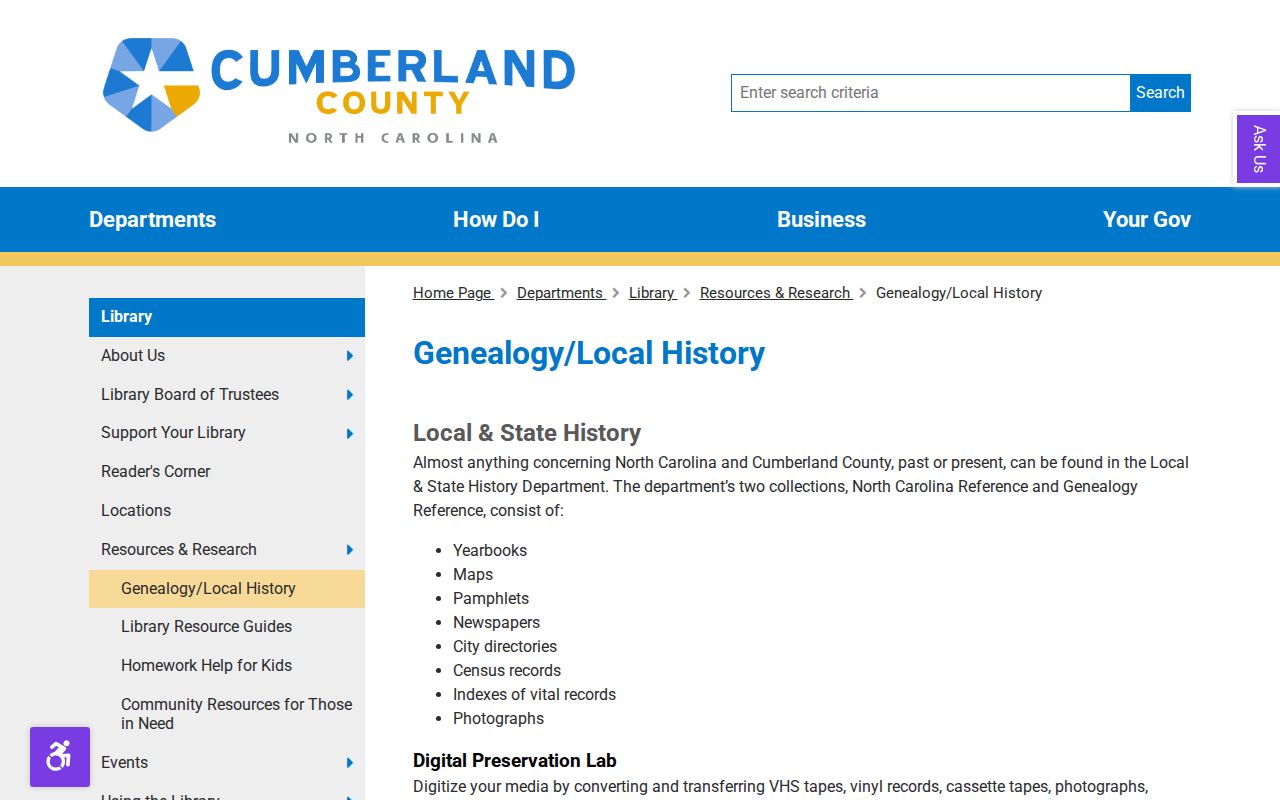
Catalog access can start online, but the full chain includes a call to reference staff, onsite books or microfilm, and a focused copy request. Staff retrieve materials and answer limited questions. They do not conduct broad family-history projects.
City Directories
Exact library run must be confirmed.
Use the catalog, reference desk, or onsite volumes.
Digitized Volumes
Verified Fayetteville editions: 1928, 1939, 1941, and 1953.
Access through DigitalNC.
Phone and Reverse Books
Coverage is title-specific, with exact years unverified.
Ask Local & State History staff.
Newspaper and Obituary Files
Publication and microfilm runs vary.
Use a date-led staff request or search onsite.
Cumberland Yearbook and Obituary Directories
Yearbooks can place students, teachers, teams, clubs, and campus staff in Cumberland County at a specific time. Search Fayetteville State’s collections, school or university archives, the public library catalog, and North Carolina Digital Collections. A yearbook name is evidence of publication, not proof that the person graduated or stayed in the county.
Obituaries work as family directories because they may name relatives, a church, cemetery, prior hometown, and military ties. The Fayetteville Observer is the chief long-running newspaper trail. Library staff need a date of death because the newspaper collection is not indexed by personal name. Out-of-county researchers may receive up to five copies free; extra copies cost $0.15 plus postage. Funeral-home archives and cemetery registers can extend that chain, but sensitive details about living relatives deserve care.
Note: Confirm newspaper and yearbook date spans with the catalog because database licenses and microfilm holdings can change.
Cumberland Directories Across Three Centuries
Historical people directories in Cumberland County reach beyond printed phone books. DigitalNC verifies a 1928 Fayetteville volume, with other verified editions from 1939, 1941, and 1953. An alphabetical city directory turns a surname into an address and often an occupation. A reverse or criss-cross directory turns a street or telephone number into an occupant. Search spouses, initials, nearby households, and Mc or Mac variants because older spelling and listing customs were not consistent.
- 1752 to 1942
- State Archives deed indexes name grantors and grantees, even though Cumberland County formed in 1754.
- 1866
- Cohabitation records may document unions of formerly enslaved couples whose names can be hard to find elsewhere.
- 1928 to 1953
- Four verified digitized Fayetteville directory years provide address and household snapshots.
- 1950
- The newest publicly released individual federal census can be paired with nearby directory years.
The State Archives Cumberland County guide leads to deeds, estates, court minutes, taxes, schools, officials, and miscellaneous material. Its unusual records include naturalization papers, a cohabitation certificate, auctioneers’ returns, Bank of Fayetteville papers, Civil War corn and salt distribution lists, and wildcat-bounty payments. Search the online catalog first, then request copies or inspect series onsite in Raleigh when images are not online.
Boundary history matters. Harnett County formed from northern Cumberland in 1855, so later records for one family may move to a new keeper. For an earlier birth or death, statewide registration did not begin until 1913. Church, cemetery, Bible, newspaper, and delayed-registration sources then become the best directories of names.